Marketplace
B2C · WebNew and used cars, every official brand down to trim level.
Carmate is a marketplace for new and used cars in Cambodia. I started it in 2020 and have looked after the product side ever since: four products, the business with brands and dealers, and the code. Before that I studied architecture at the Bartlett and worked at Grimshaw in London.
Four decisions from Carmate and how they turned out.
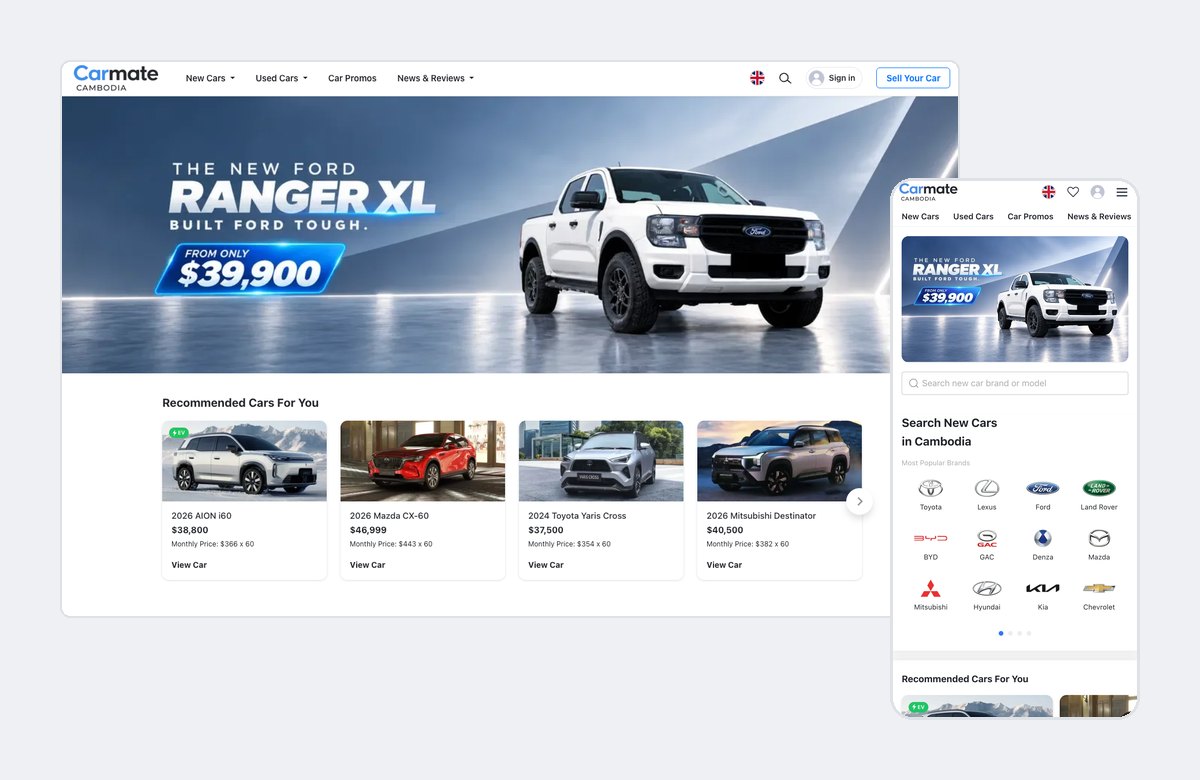
The four Carmate products. Most of our users are new to buying anything online, and that shaped a lot of the design.
New and used cars, every official brand down to trim level.
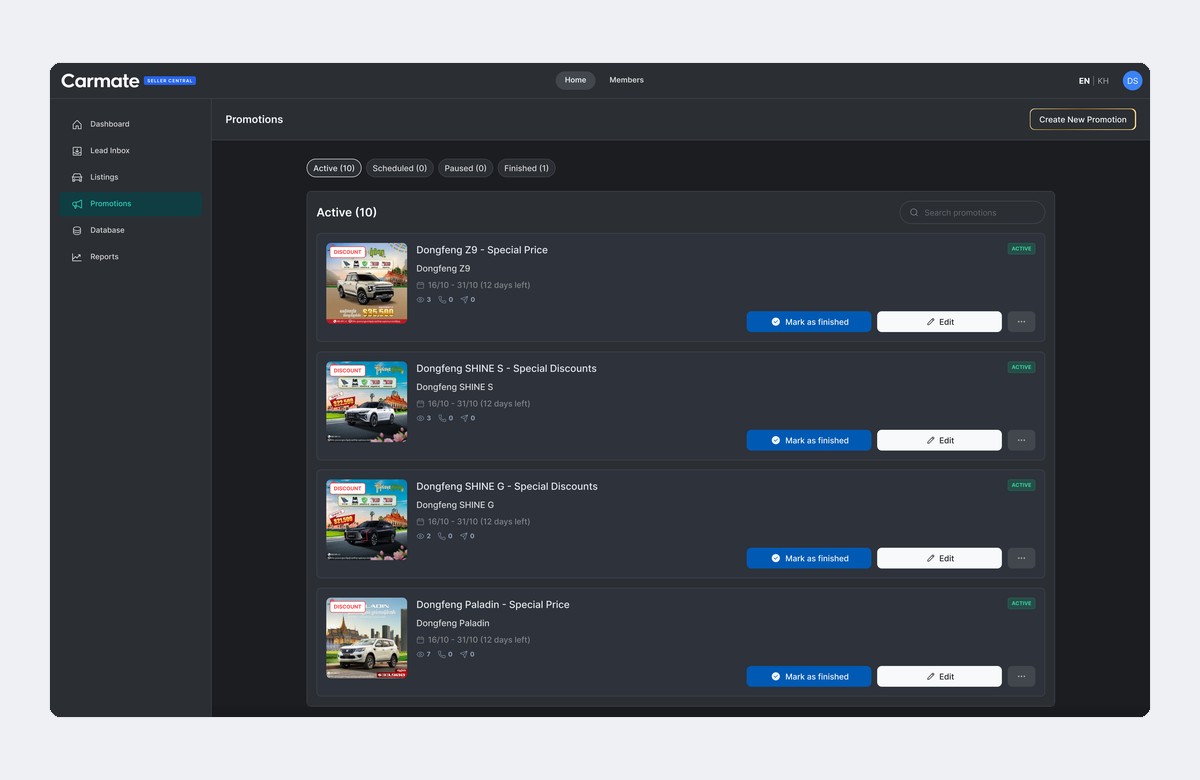
Official brands manage listings, stock, promotions and staff, keep their new models' specs up to date, and get a monthly report on who looked at their cars and what they did next.
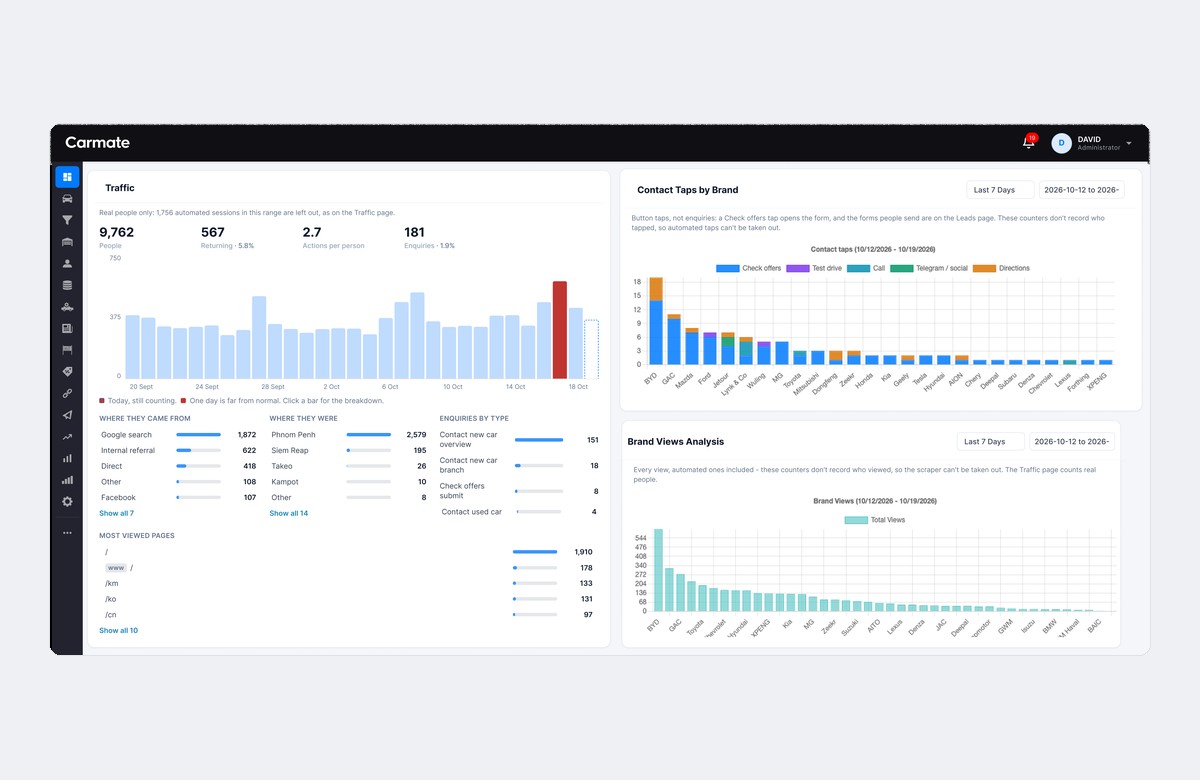
Real-visitor traffic, enquiries and contact taps by brand, alongside the catalogue, leads and listing review.
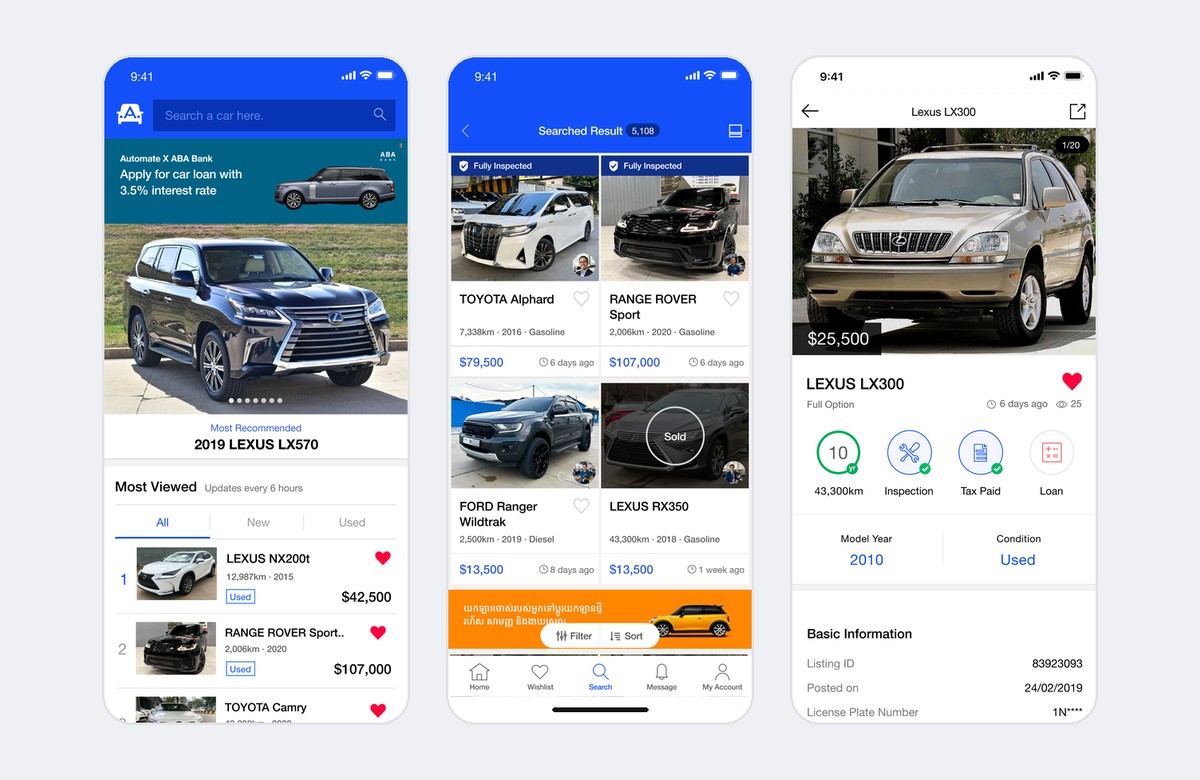
Where Carmate started, before we moved to the web.
Some of the less visible work behind the products.
I set up GA4 and the Meta Pixel to fire on every buyer action (Check Offers, test drive, call, Telegram, loan enquiry) and connected them to our Facebook and Instagram ads. The reports now show which ad and which page an enquiry came from, from the first visit to the submitted form.
Many Cambodians have one number per mobile network, because calls between networks often don't go through. So a seller might sign in with one number and want buyers to call another. Rather than make them pick one, every number they verify signs in to the same account.
I went through our server logs and found that about a third of the traffic on brand pages came from scrapers. I blocked them with Cloudflare rules. Visits went from 32,831 down to 21,360, and what brands see now is real people.
A promotion is set on a model or some of its trims, but a brand doesn't always want every car in stock to be part of it. So the promotion stays at model level, and each listing has an optional promo price field that only opens while a live promotion covers that car. Staff decide car by car, and no price changes unless they set it.
A platform for a bank, a store I ran for the same bank, and my first business.
An internal platform bank staff used to record loan collateral, with a map, valuation reports and area prices over time. I designed the UI/UX, built the React frontend and trained the staff.
The bank chose Carmate as its partner to run the store. That meant marketing, finding dealers and individual buyers, and handling stock, sales and repairs.
I found suppliers in Madagascar. The harder part was Korea: working out who buys vanilla and how much, setting prices from landed cost, and building up B2B customers, along with the brand, packaging and an ordering website.

I studied architecture at the Bartlett (UCL) and worked at Grimshaw on the London Bridge Station redevelopment, modelling platforms and canopies and working with a lot of different parties on site. Since then I've started from nothing three times: a vanilla import business, a collateral platform for a bank, and Carmate.
At Carmate it was usually me and one developer, so I've done the product work and a fair bit around it: talking to dealers and brands, the business model, UX and the design system, frontend and backend, deployment and growth. These days I write the code myself, working with AI coding tools.
I'm looking for a product role where I can work on growth as well, in marketplaces, fintech, trading or consumer apps. I live in Phnom Penh (UTC+7).