Brands didn't want traffic. They wanted customers.
In 2024 Carmate was a new-car catalogue. Brands liked it, but they kept asking the same question, and it took us too long to build around it. This is how we got to selling leads, where it stands now, and what I'd do differently.
The market turned to new cars
By 2024 it was clear that Cambodia's car market was shifting from used cars to new ones. Carmate had been built for used cars, where a listing is posted and people browse. New cars needed a full catalogue instead, with every official brand, model, year and trim, and prices people could rely on.
I designed the catalogue starting from the data structure, and our local staff entered the data. When it went live it was complete, but that was all it was. A buyer could call the brand and that was it. We had no way of showing a brand what we'd sent them.
We were measuring the wrong number
For most of Carmate's life we watched traffic, meaning visits and page views. It kept going up and looked good in reports, but it didn't answer the question brands kept asking us.
For a lead marketplace, the number that matters (the North Star) is qualified buyer leads delivered to sellers each week. By qualified I mean a real buyer we can reach, asking about a specific model. The rest feeds into it:
What brands told us
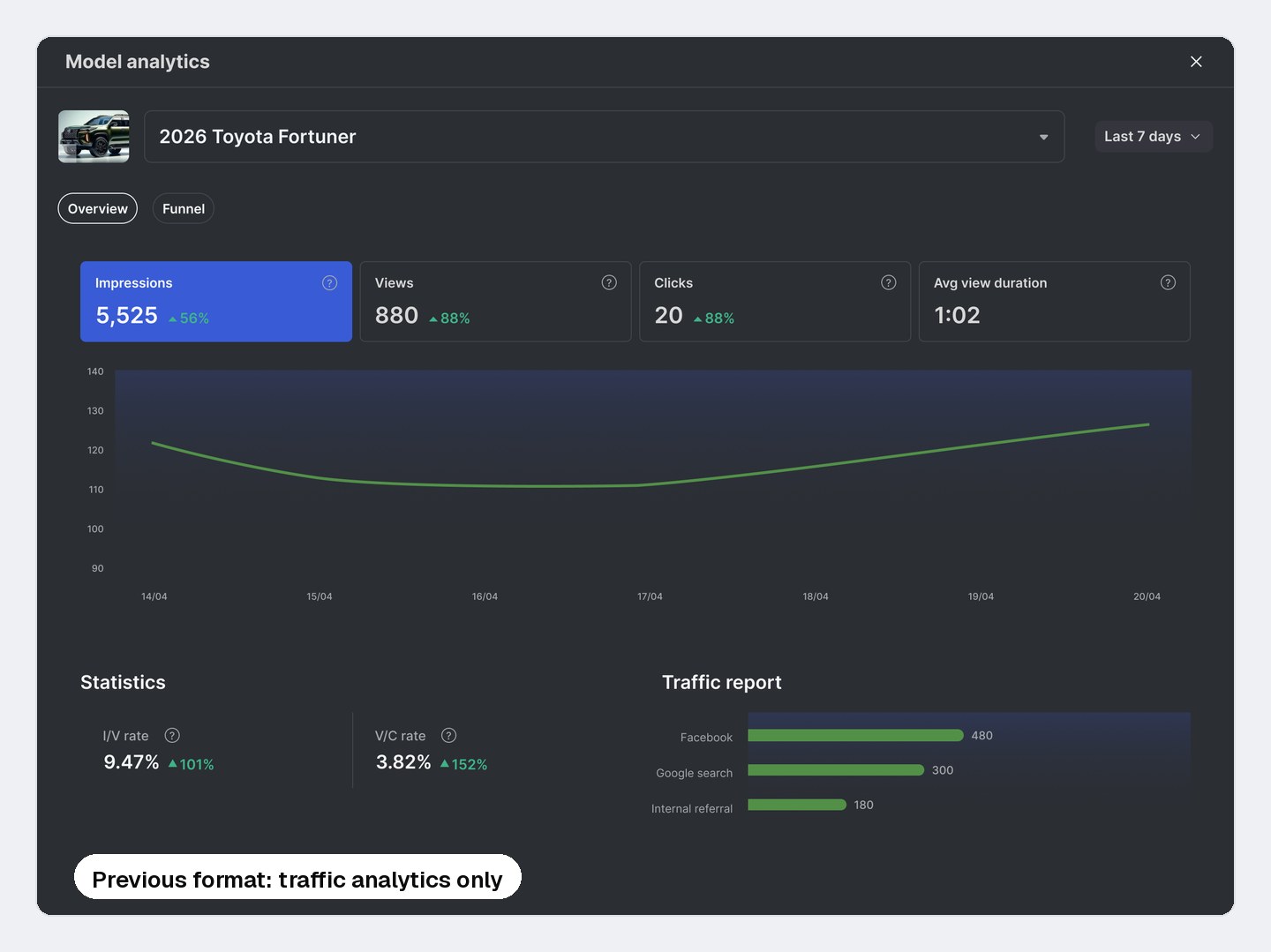
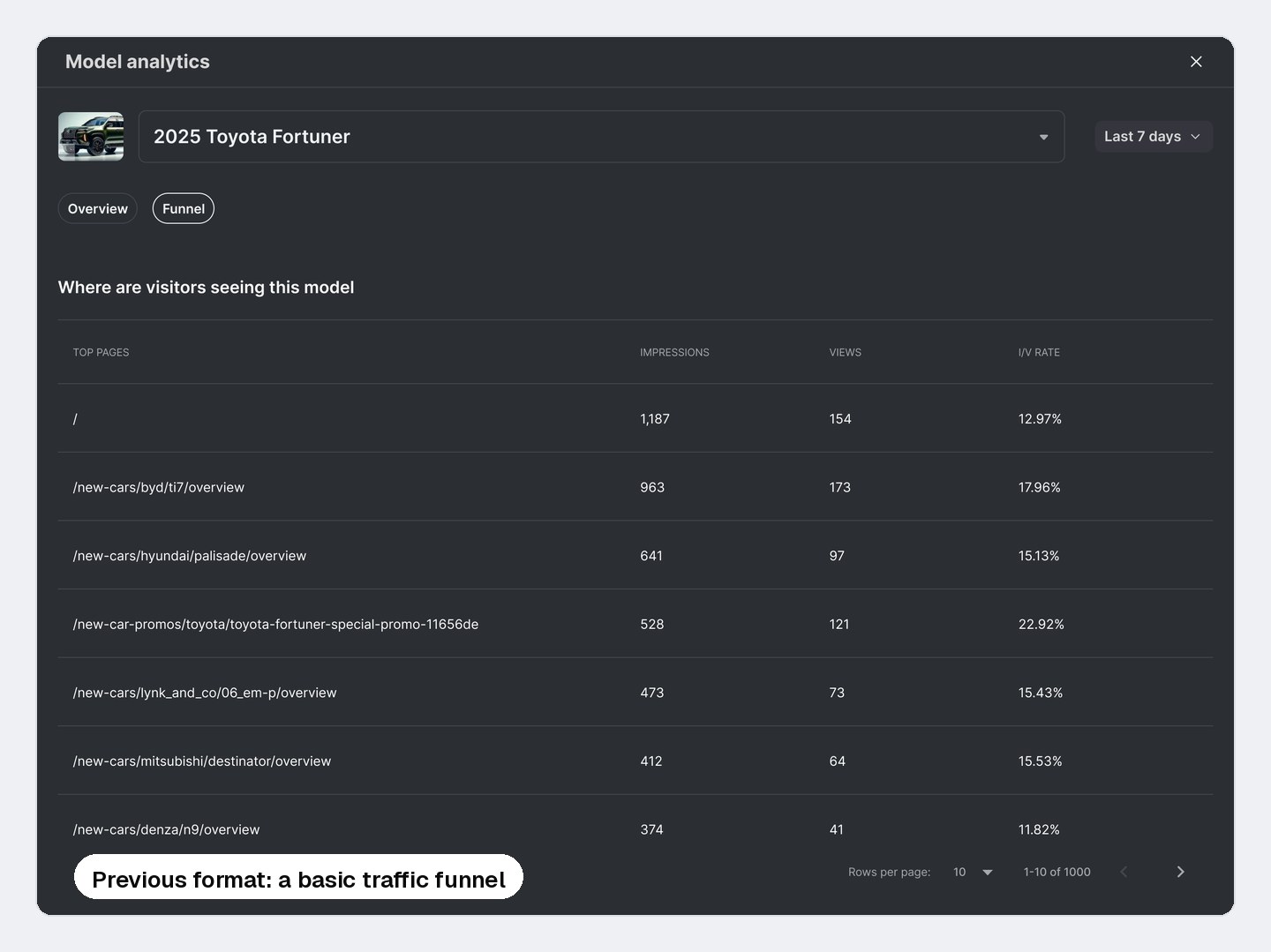
I built a first version of Seller Central. For buyers it meant real in-stock cars and current promotions. For brands it showed visitors down to every button click, and had a price manager so they could update trim prices quickly. From mid-March 2026 I met several official brands with it. Reactions were mixed. They liked a few things:
But:
“Brands don't buy traffic. They buy customers.”
I'd heard this before, from used-car dealers. They ignored our calls until the day we brought a buyer to their shop, and after that they always picked up. Official brands turned out to be the same. What they would pay for was a buyer.
Charge for buyers, not for software
Rebuilding around the lead
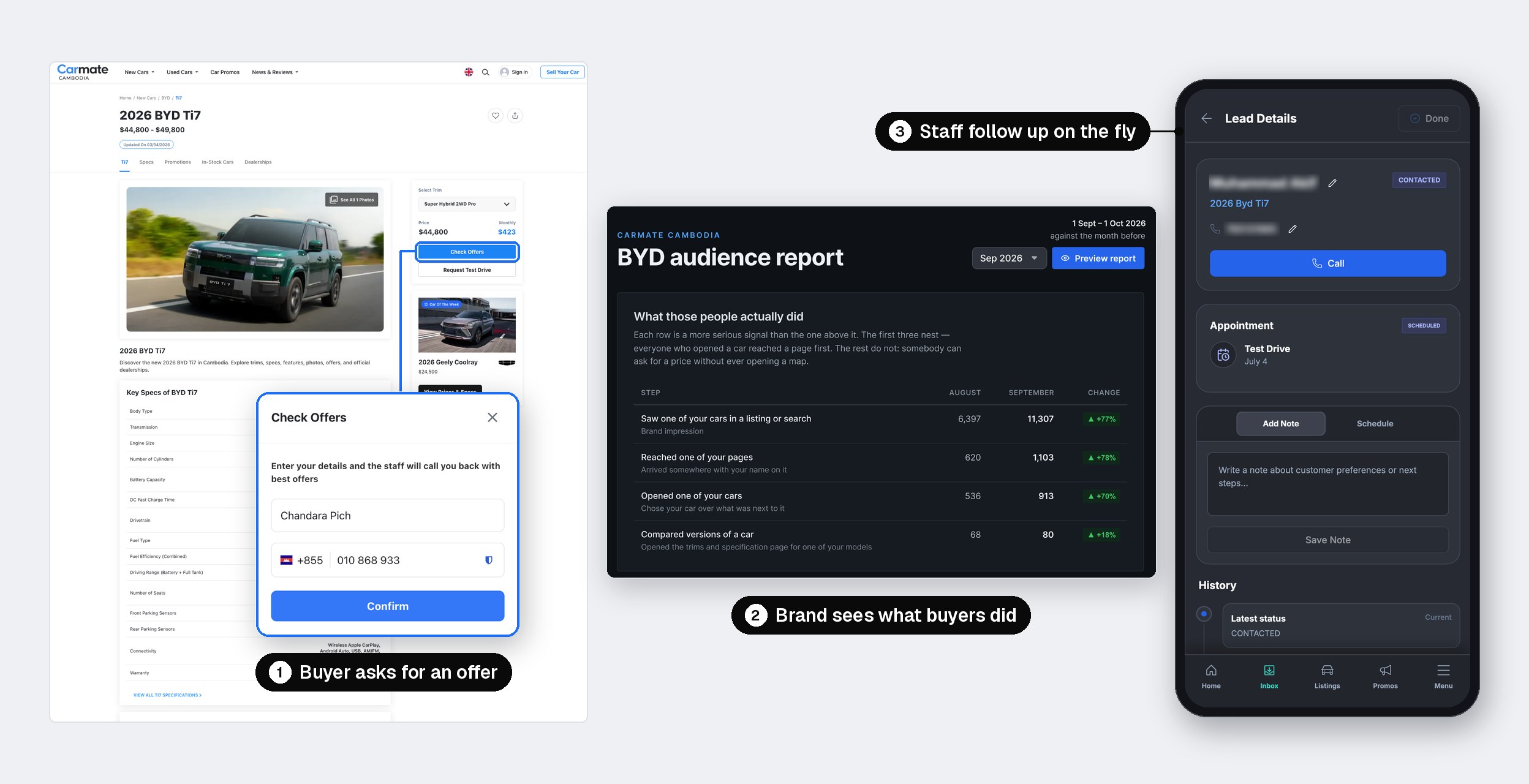
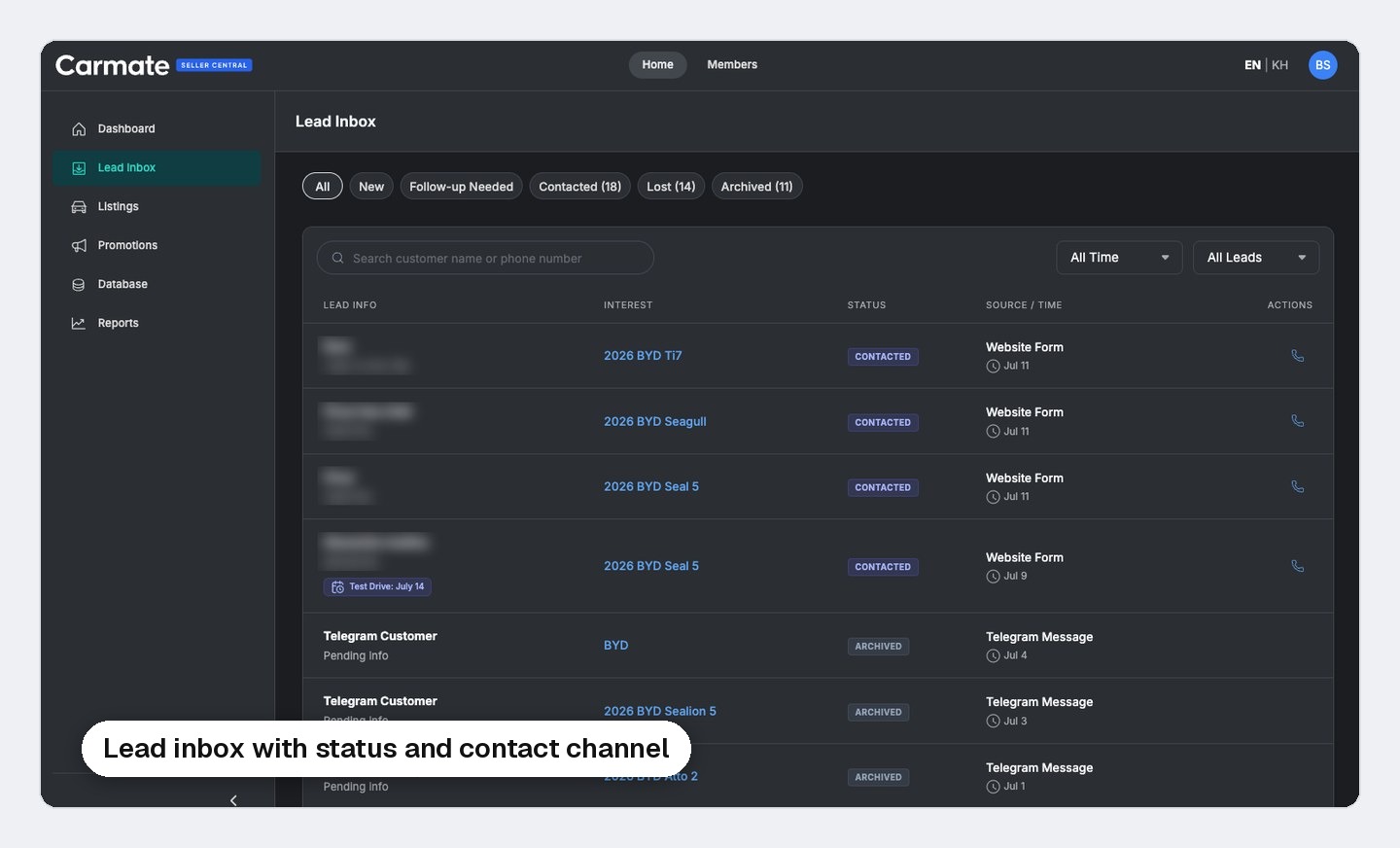
I started the redesign in April 2026. Check Offers and test-drive forms went onto every model and promotion page. Seller Central was rebuilt around a lead inbox, and the traffic charts moved into Reports. Each brand's monthly report now starts with its leads and shows which pages they came from.
Real demand, not yet a business
The product half worked. The business half isn't proven yet.
Buyers come without any advertising, they ask for offers, and the numbers we report are real.
Only about 4% of people who press Check Offers finish the form. Filling in a form online is still fairly new in Cambodia, so I think a lot of those presses are curiosity. The 41 who finished are the buyers brands want. What I can still fix is the serious buyers who tried and failed because of an invalid number or an error. For the curious ones, something lighter, like saving a car, would keep them around.
The bigger problems come after the form. About one in five leads can't be reached, and no brand is paying yet. Until a brand pays for a lead, I can't say the model works.
What I'd do differently, as a product lead
The biggest mistake was doing things in the wrong order. I spent months on Seller Central, dashboards and traffic reports included, before any brand had received a single buyer from us. Brands care about results, and it's hard for them to picture what a tool will do for them. If I did it again:
Carmate is at step 2 now. We got there the long way, through Seller Central.
Two other things. I should have set the North Star in the first year. Dealers were already paying us commission for buyers, so the number was always going to be qualified buyers delivered to sellers. And I'd agree with a brand on what counts as a qualified lead before launch, and track the contact rate from the first day.